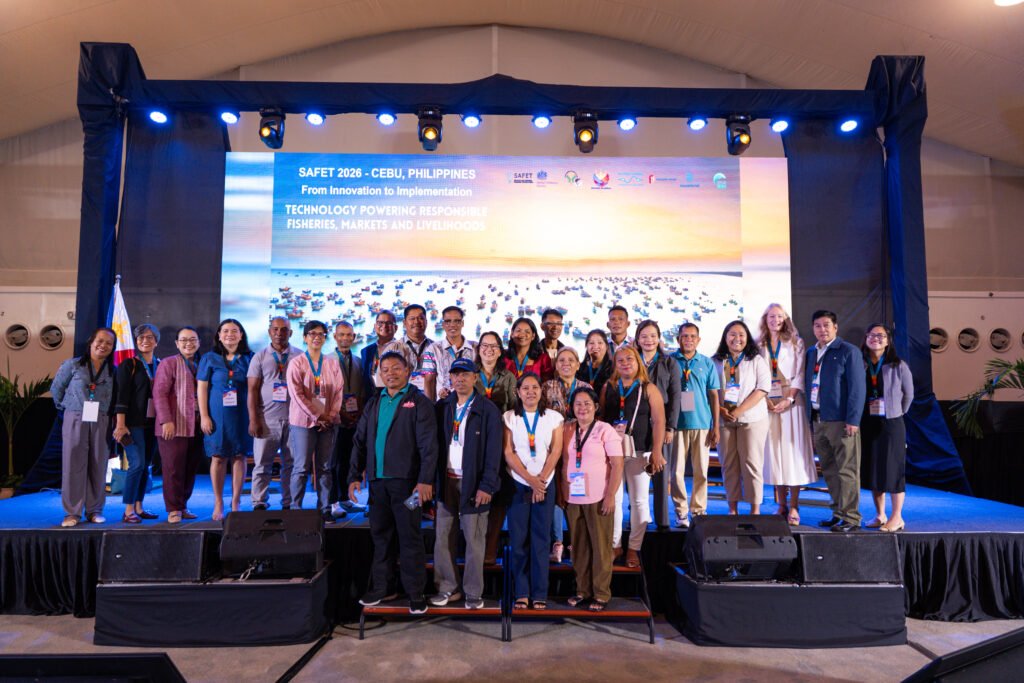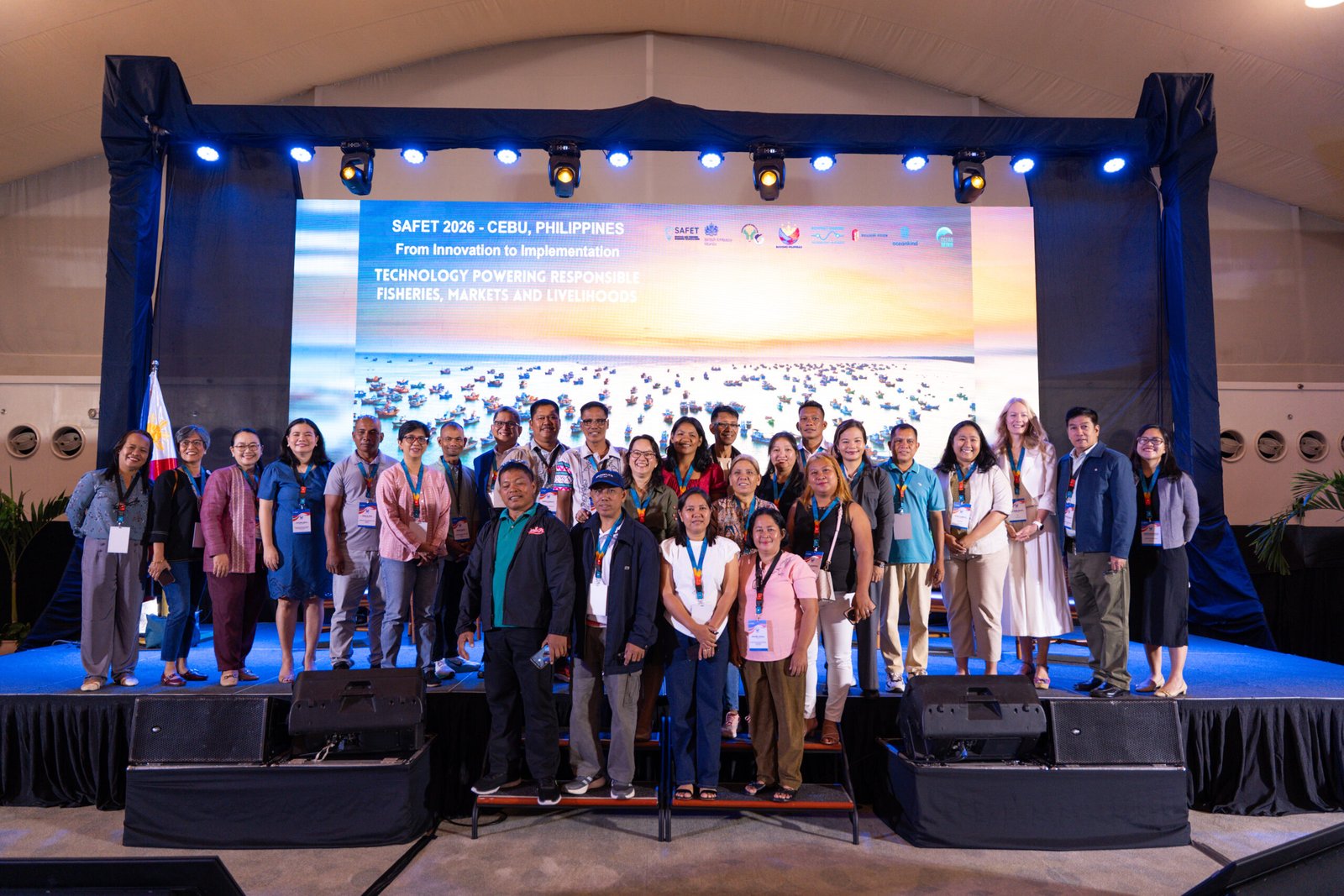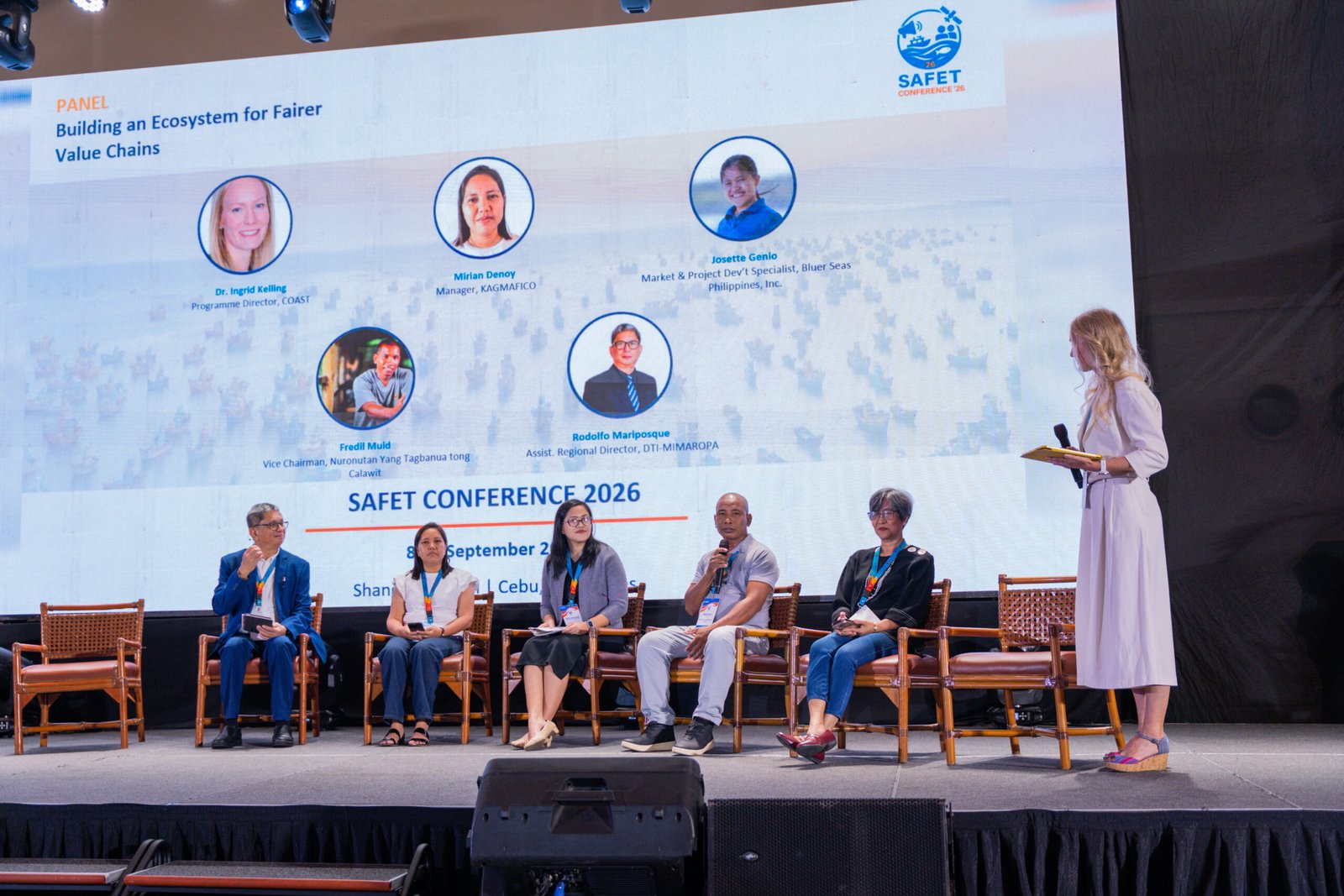
Cebu, Philippines — The Seafood and Fisheries Emerging Technologies (SAFET) Conference in Cebu wrapped up and Bluer Seas Philippines is proud to have participated at the event. Rebecca Andong, Bluer Seas Philippines’ Executive Director, alongside Josette Genio, Market and Project Development Specialist attended the conference with one core idea highlight: small-scale fishing communities can fish responsibly and still remain invisible to the markets that say they want responsible seafood.
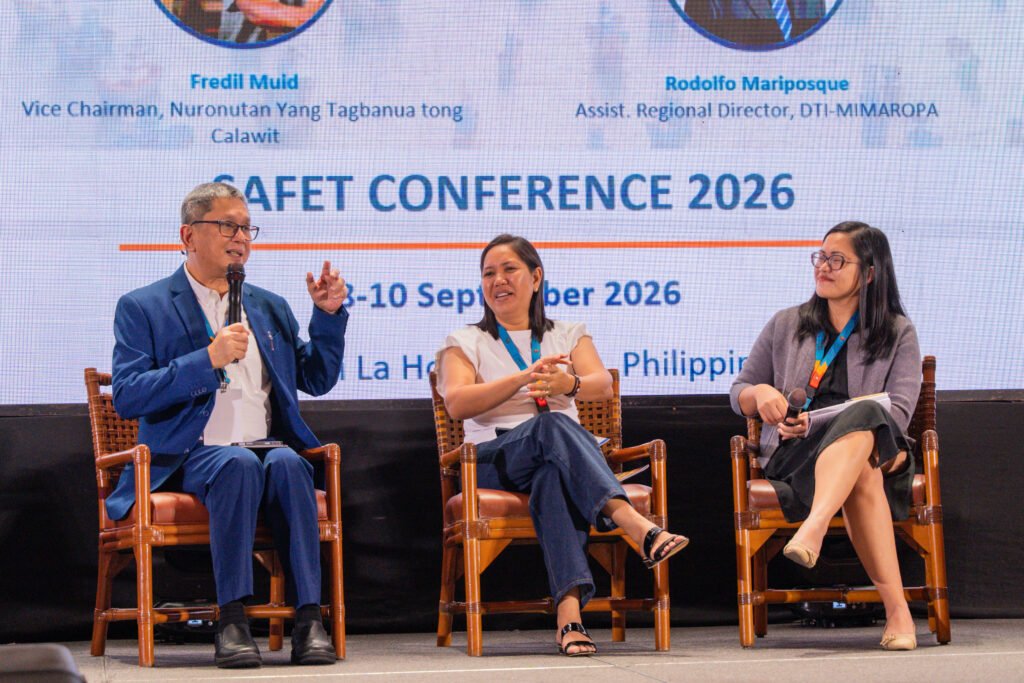
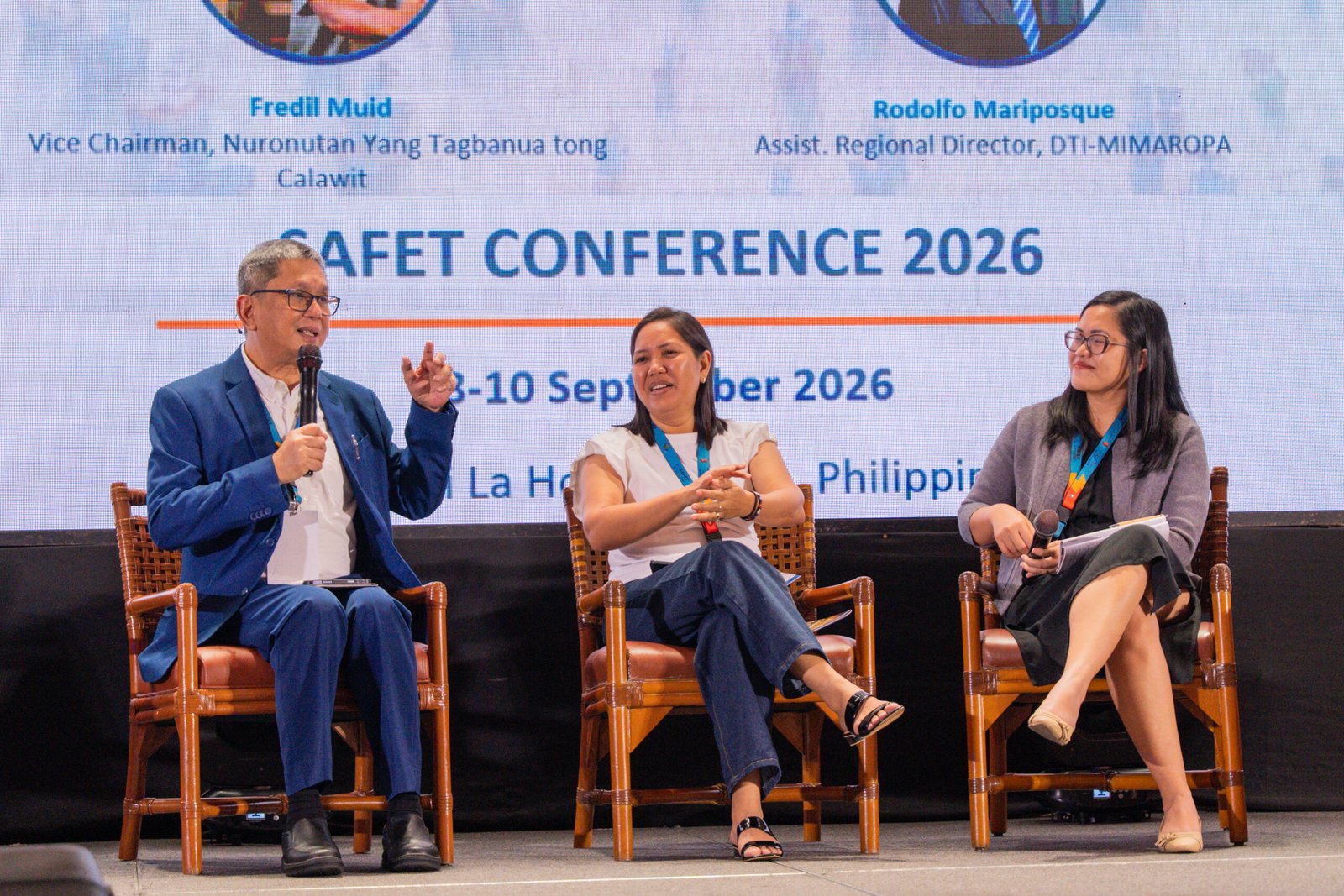
This core idea was the foundation for Genio’s participation at the main program session entitled Building an Ecosystem for Fairer Value Chains: Enabling Markets to Reward Responsible Fisheries, convened under the United Kingdom’s Climate and Ocean Adaptation and Sustainable Transition (COAST) Facility and moderated by its Programme Director, Ingrid Kelling. Bluer Seas opened with a presentation on the Responsible Seafood Sourcing (RSS) Standard, then joined a panel alongside KAGMAFICO, the Department of Trade and Industry MIMAROPA, and a community supplier speaking for his own people.
The panel became a good opportunity to challenge prevailing tensions in the fisheries sector.
As fishers are being asked to meet ever higher standards of responsibility, the rewards for meeting them remain uncertain. In short, sustainability is being asked for, but incentives are not following suit. It asks, why does responsibility not automatically become value?
Translating responsibility into value
Genio began BSP’s presentation by examining the disconnect at the centre of the problem. As it stands, markets do not reward intentions, instead rewarding credible information about attributes buyers can act on, such as traceability, food safety and quality, supply consistency, sustainability and social responsibility, and price. Buyers use that information to meet operational requirements, satisfy corporate and ESG commitments, and manage risk in their supply chains.
Most responsible fishing in the Philippines produces none of that information. Good practice goes undocumented. Food safety gaps are less a matter of awareness than of infrastructure, with cold chains and even ice out of reach in many coastal communities. The burden of compliance falls on fishers, whose costs are disproportionate to their volumes and whose incentives are never guaranteed. Women, Indigenous Peoples, geographically isolated communities and smallholder producers face all of this and more.
In the end, fishing responsibly does not translate into better income.
“Fair value” as a community defines it
Fredel Mued, Vice Chairman of Nurutan Yang Calamian Tagbanua Yang Calawit May Quezon, an Indigenous community supplier working with the RSS Standard, was asked what fair value means to his people. Indigenous and artisanal fishers set out at dawn, facing the heat of the sun, strong waves, rain and real danger at sea. They do it so there is food at home and income for the family.
“Fair value,” he said, “means the proper valuation of their products, their service, their time and their effort.” And he was clear that it is not only about price. It is about fairness in the relationship between the one selling and the one buying, because their catch is not simply a product, but the outcome of hours invested, the exhaustion sustained, and the risks that are taken.

RSS Standard: Making Responsible Fisheries Visible
Asked which of the barriers raised by the panel RSS can address, Bluer Seas’ Market and Project Development Specialist Josette Genio, returned to the presentation’s opening line: markets do not reward intentions, they reward information that translates into valuable product attributes. That is the work RSS does. It documents practices, verifies them, and communicates them to the market as a value proposition.
As a framework, RSS is a set of criteria and indicators that define responsibly sourced seafood and assess practices in fishing, sourcing and trading. It recognises responsible practice, identifies the barriers to traceable and equitable trade, reduces information asymmetry along the chain, and connects responsible suppliers with buyers who are committed to sourcing that way.
As a strategy, it works from both ends. On the supply side, it builds post-harvest handling, processing, value-adding and food safety capacity, and improves access to cold chain, equipment and market-ready traceable products. On the demand side, it engages buyers and supply chain actors to adopt responsible and inclusive procurement policies and the business systems that make transparency possible.
Visibility, though, only matters if it changes how communities sell, to whom, on what terms, and how much of the value they keep. Case data from Calauit and Panlaitan showed exactly that. Products moving through the default route ( municipal producers to community consolidator to onward trader) started at ₱100–120 and passed through several hands before leaving the community’s sight altogether. With value-adding and deliberate market connections, the same product reached ₱260 with an institutional buyer and ₱450 with hotels and resorts in Coron.
Beyond the onward trader, traceability and value distribution become unknown. In effect, communities are blind to where their catch goes or what it earns.
What is still missing
Asked what single change would make the greatest difference to his community’s ability to earn fair value, Fredel named four things:
- A fairer price, through more direct connections to buyers, so more of the value stays in the community.
- Value-adding equipment such as a solar-powered ice plant, a drying facility, a vacuum sealer so their catch does not spoil and can be sold at a fairer price.
- Access to capital and equipment, so fishers are not forced to rely on informal lenders charging high interest.
- Traceability with incentives for fishers who use legal gear and keep their fishing sustainable.
He returned to the same list later. A fair partnership, for him, is one where those four elements are met. The other panellists confirmed the diagnosis from their own vantage points. “Responsible fisheries cannot be built by asking fishing communities to carry ever more responsibility while the rest of the value chain remains unchanged,” said COAST Facility Programme Director Ingrid Kelling. “The challenge is not simply how we scale responsible sourcing, but how we move from a system in which small-scale and indigenous fisheries need special support…towards one in which inclusion is the norm.
DTI MIMAROPA Assistant Regional Director Rodolfo Mariposque pointed structural barriers and the need to innovate, “the technology should be understandable, adaptable.”
“The Philippine fish and seafood market is projected to reach US$13.4 billion by 2034, driven partly by rising demand for sustainably produced and value-added seafood. But constraints on community capacity, infrastructure, financing and technology remain,” said Genio. “RSS alone cannot resolve them. The right infrastructure has to be adapted to the context of the [island] communities, otherwise, the likelihood of success is very, very low.”
Making equitable value chains the norm, not the exemption
Bluer Seas Philippines’ participation at SAFET highlighted the multifaceted nature of the supply chain issue. The more sophisticated responsible sourcing becomes (i.e., more data, more traceability, more verification), the easier it is for well-resourced producers to comply, and the harder it becomes for the communities the system most needs to include. Responsible sourcing can quietly turn into another barrier to market access.
While technology can make responsible practice visible, and RSS can carry that information to markets, neither will deliver fairer livelihoods unless inclusion is designed into the system from the start. The challenge is not only how to scale responsible seafood sourcing. It is how to move from a system where small-scale and Indigenous fisheries need special support or exemptions to participate, to one where their inclusion is the norm.
And that responsibility cannot sit with fishers alone. It belongs across the value chain. From the government, businesses, investors, development partners, technology providers and consumers, all must pitch in.
Our thanks to the COAST Facility and UK International Development for convening the session, to our co-panellists from UK CEFAS and DTI MIMAROPA, and above all to Fredel Mued for bringing his community’s own words into the room.
Bluer Seas Philippines is funded in part by UK COAST and the UK Department for International Development.